
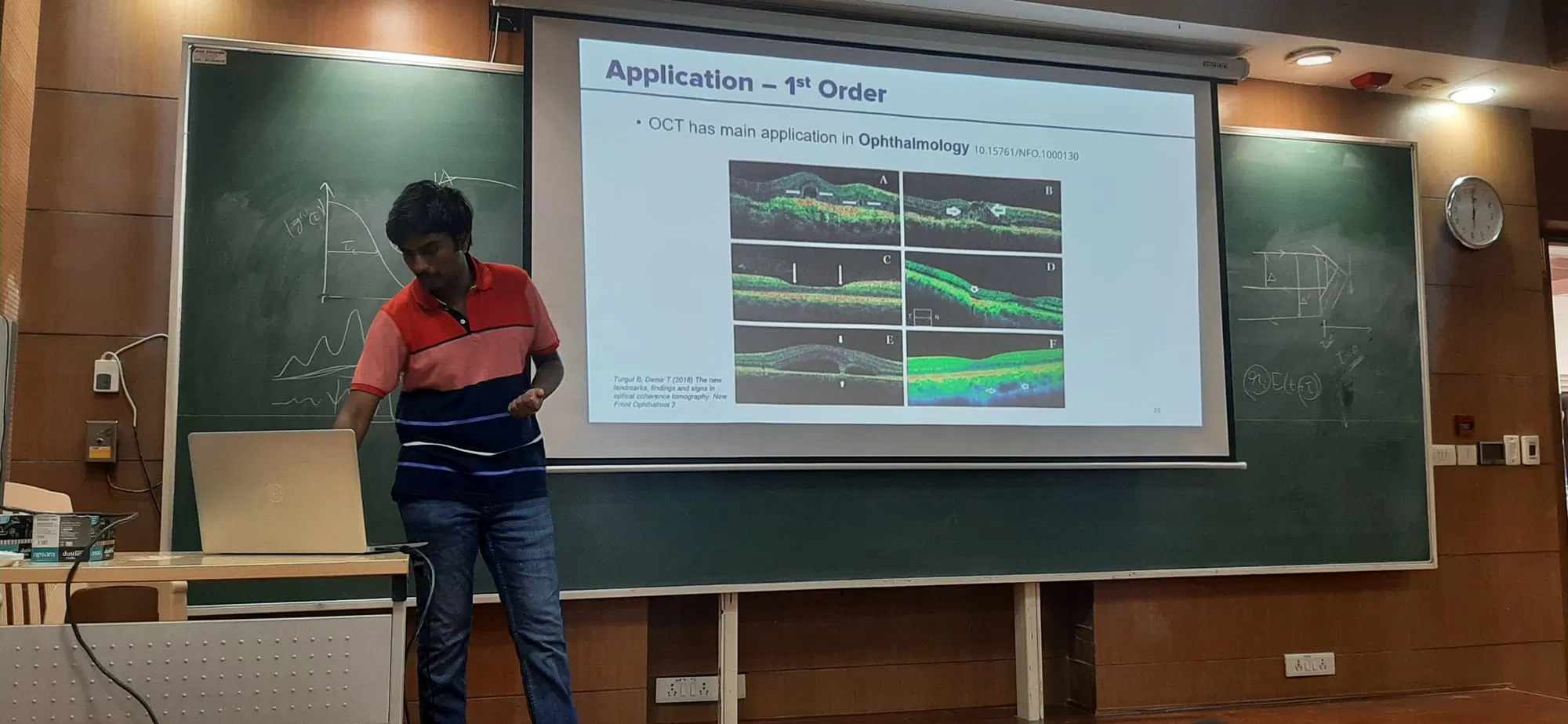
When we deal with light in physics, we generally assume it to be a monochromatic wave. However, having a monochromatic wave is impossible; we often have quasi-monochromatic sources. This leads to partial coherence in light fields. Quantifying this coherence property...[Read More]
Semester Talks
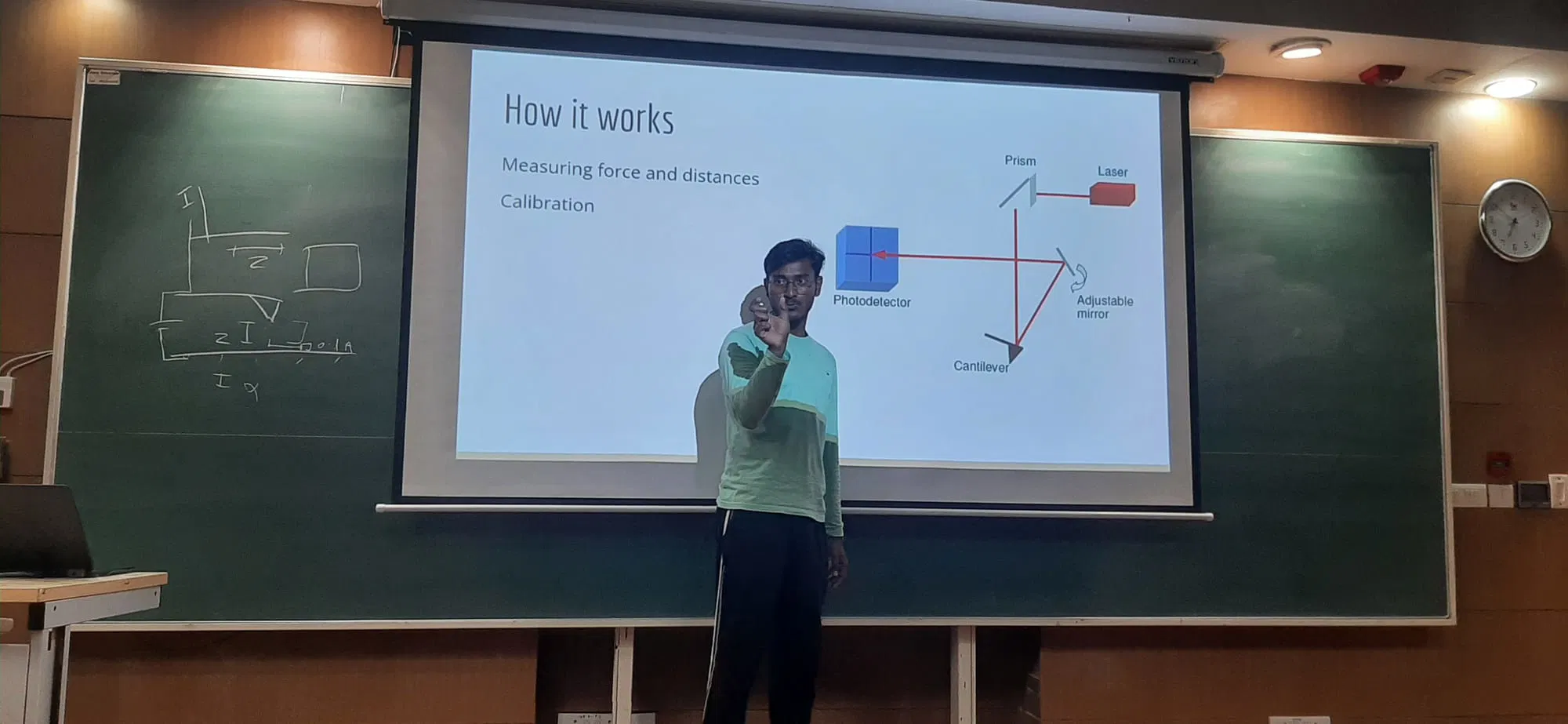
Atomic Force Microscopy
Condensed Matter Physics
By VishalAtomic Force Microscopy is a microscopy technique which uses a physical probe to scan the surface. It can have a high spatial resolution up to fractions of a nm. AFM can also be used to give 3D topography of a...[Read More]
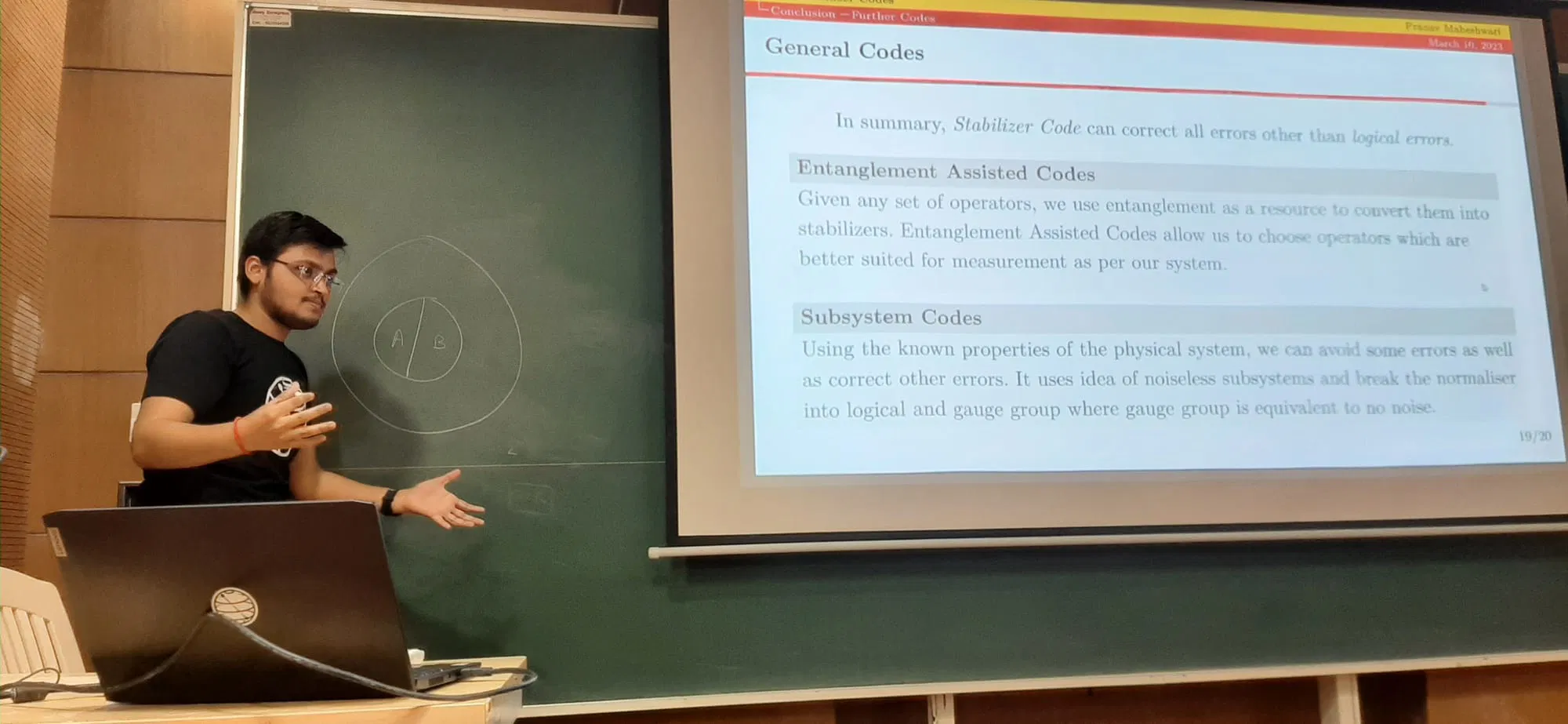
Quantum Error Correction Codes - Stabilizer Formalism
Quantum Information
By Pranav MaheshwariQuantum Computing has a lot of possible advantageous uses over classical computing but presently the field is in its infancy. The biggest challenge for it is to get rid of noise or become robust against errors. Dealing with noise in...[Read More]
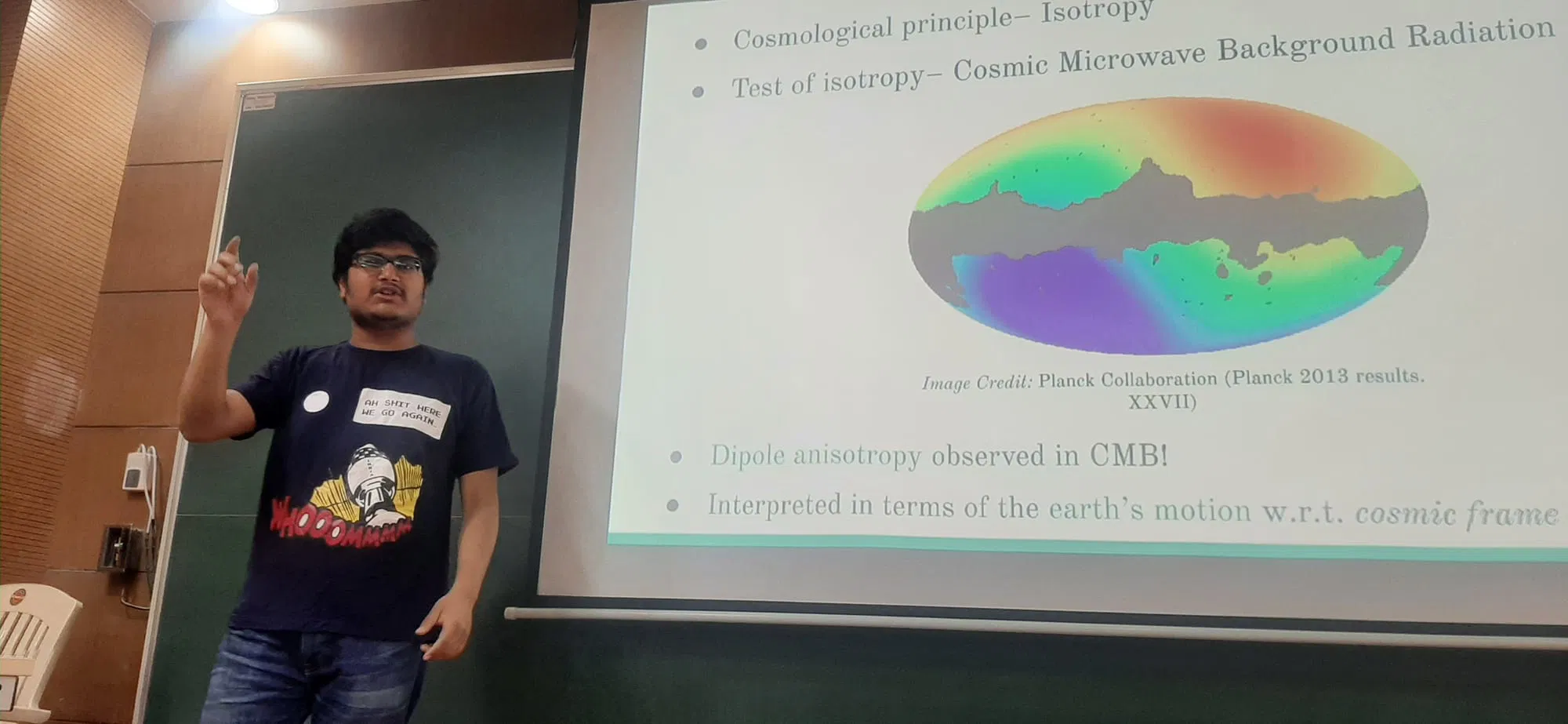
Measuring Earth’s Motion Using a Population of Gravitational-Wave Sources
Cosmology
By Kaustubh GuptaMeasurements of the Cosmic Microwave Background Radiation (CMB) indicate the presence of a dipole anisotropy in the sky distribution of temperature fluctuations of the CMB photons. We believe that the CMB dipole arises because of the earth's motion with respect...[Read More]
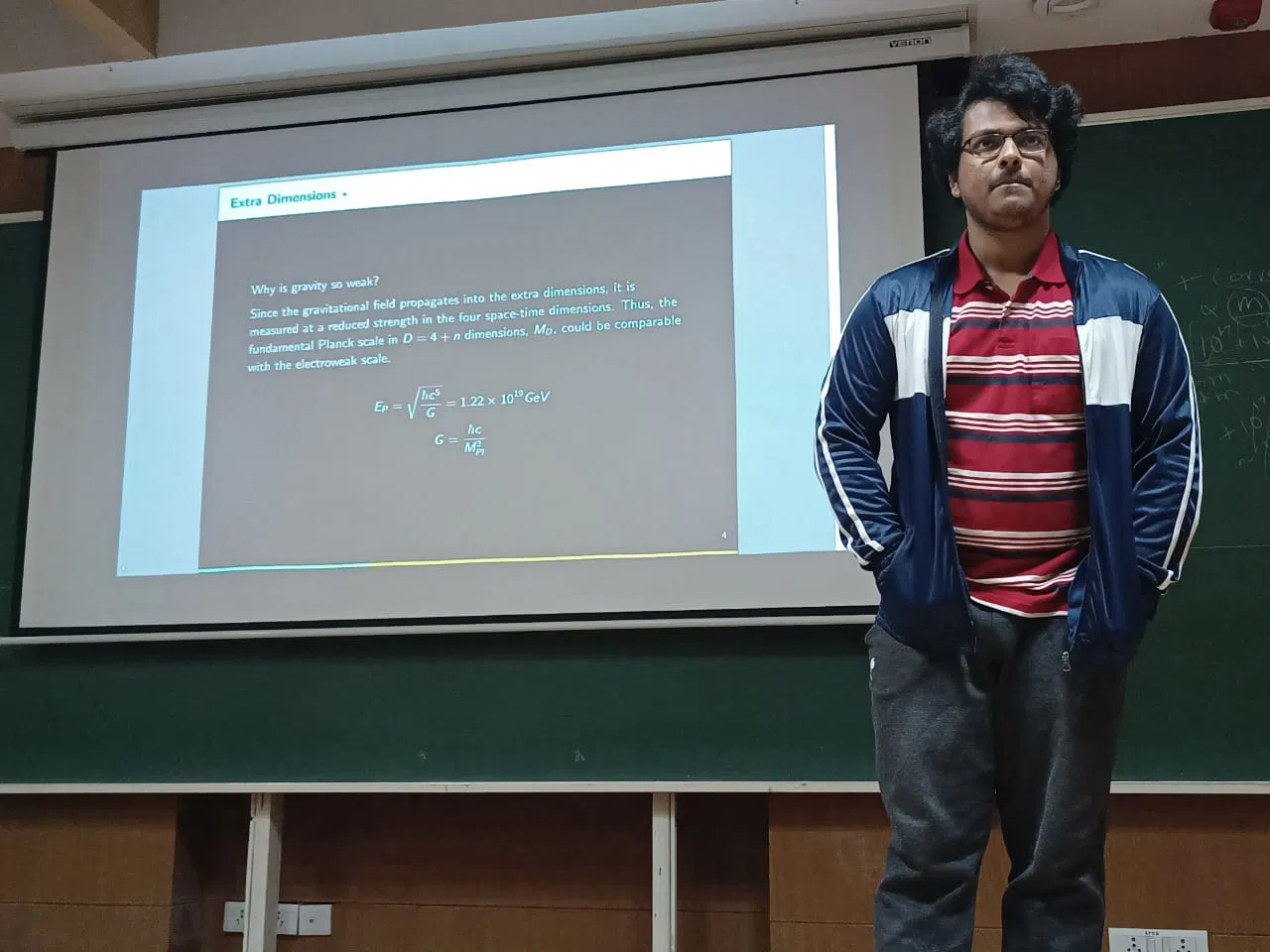
Search for Microscopic Black Holes
Experimental High Energy Physics
By Parijat BanerjeeI will present a search for microscopic black holes in a like-sign dimuon final state in proton–proton collisions at √s = 8 TeV. The data were collected with the ATLAS detector at the LHC in 2012 and correspond to an...[Read More]


